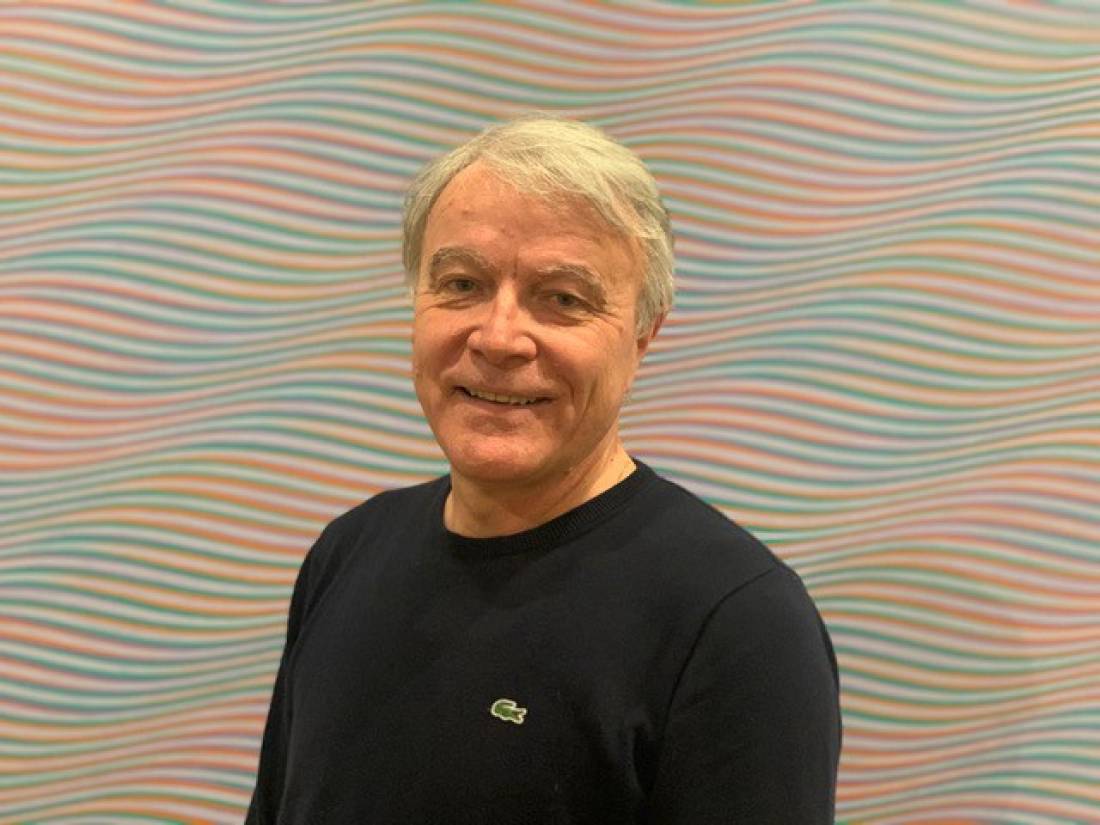
Dr Pushan Kumar Dutta is an Associate Professor at the School of Engineering and Technology, Amity University Kolkata, with interdisciplinary expertise in artificial intelligence, data science, Internet of Things, digital twins, smart manufacturing, biomedical AI, sustainability, and intelligent cyber-physical systems. He received his Ph.D. in Electronics and Telecommunication Engineering from Jadavpur University in 2015 and subsequently pursued postdoctoral research at the University of Oradea, Romania, under an Erasmus-supported programme during 2015–2016.
His academic record includes more than 350 listed scholarly contributions, an h-index of 16, over 1,400 Scopus citations, and more than 60 published or edited academic volumes. In 2026, he was included in the Stanford–Elsevier science-wide database of top-cited scientists, with his primary-subfield analysis placing him within the top 0.89% in Mechanical Engineering and Transports. His research demonstrates broad SDG relevance and a reported Field-Weighted Citation Impact of 2.99. He has served as a NITI Aayog Mentor of Change since 2019 and actively mentors student innovation, including award-winning work in intelligent building automation.
TITLE OF THE KEYNOTE PRESENTATION
AI-Enabled Digital Twins and Sustainable Smart Manufacturing: Emerging Directions for Industry 5.0
ABSTRACT:
Industry 5.0 extends smart manufacturing beyond connectivity and automation by emphasizing human-centricity, resilience, and sustainability. This keynote examines how AI-enabled digital twins can become an operational intelligence layer connecting physical assets, cyber-physical systems, edge/cloud computing, and manufacturing decision support.
The talk focuses on four emerging directions:
Data-driven and physics-informed twins for condition monitoring and predictive maintenance;
Generative and agentic AI for design, planning, and adaptive decision support;
Closed-loop optimization for energy, material, and quality performance; and
Trustworthy governance for uncertainty, cybersecurity, traceability, and human oversight.
Representative manufacturing scenarios illustrate how digital twins can transform real-time sensor and process data into forecasts, counterfactual simulations, and bounded recommendations before actions are applied to the physical system. A central argument is that digital twins should be evaluated not only by prediction accuracy, but also by decision value: downtime avoided, energy and material use reduced, quality preserved, and resilience improved.
The presentation closes with research challenges in interoperability, model drift, sparse industrial data, verification of AI-generated actions, and integration of sustainability indicators with operational KPIs.